Intent - What does our Maths curriculum intend to do?
At Westfield, our intent for mathematics is to deliver a broad, balanced and progressive curriculum that develops fluency, reasoning and problem-solving skills across all areas of maths. Through meaningful learning experiences, children make connections between mathematics and the world around them, enabling them to understand and apply mathematical concepts in everyday life.
We strive to foster a positive attitude towards mathematics, encouraging all pupils to approach learning with confidence and resilience. Our curriculum is designed to nurture curious and capable mathematicians who are able to think critically, reason effectively and apply their skills in a range of real-life contexts. We believe that a secure mathematical foundation is essential for future success, and we are committed to ensuring every child develops the knowledge, understanding and confidence needed to reach their full potential.
Implementation - How is our Maths curriculum implemented?
At Westfield, we believe that all children are entitled to a high-quality mathematics education that provides a foundation for understanding the world, develops the ability to reason mathematically, and fosters enjoyment and curiosity in the subject.
Our approach to mathematics is designed to develop fluency, reasoning and problem-solving skills. We aim to nurture resilient and confident learners who can apply their mathematical understanding across a range of real-life contexts and curriculum areas, including science, technology and geography.
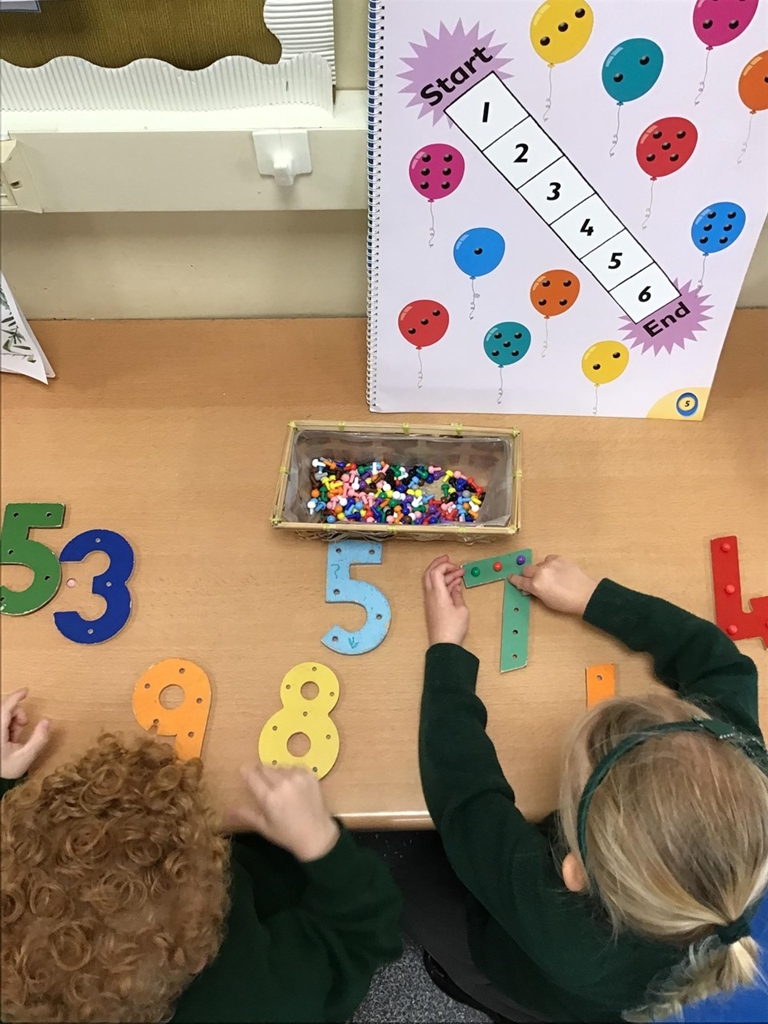
Early Mathematics at Westfield
At Westfield, we lay strong foundations for mathematical understanding from the very beginning. Our Early Years mathematics curriculum is carefully designed to equip children with the skills, language and confidence they need to become curious, capable and enthusiastic mathematicians.
We focus on six key areas that underpin early mathematical learning and provide the building blocks for future success:
- Cardinality and Counting – Understanding that numbers represent a quantity and tell us "how many" objects there are.
- Comparison – Comparing quantities and groups to identify which has more, fewer or the same number.
- Composition – Exploring how numbers can be made up of and broken down into smaller parts (for example, 5 can be made from 2 and 3).
- Pattern – Recognising, continuing and creating patterns to develop mathematical thinking and identify relationships.
- Shape and Space – Investigating shapes, position, movement and spatial relationships to build spatial awareness and problem-solving skills.
- Measures – Exploring and comparing length, height, weight, capacity and time to develop an understanding of measurement.
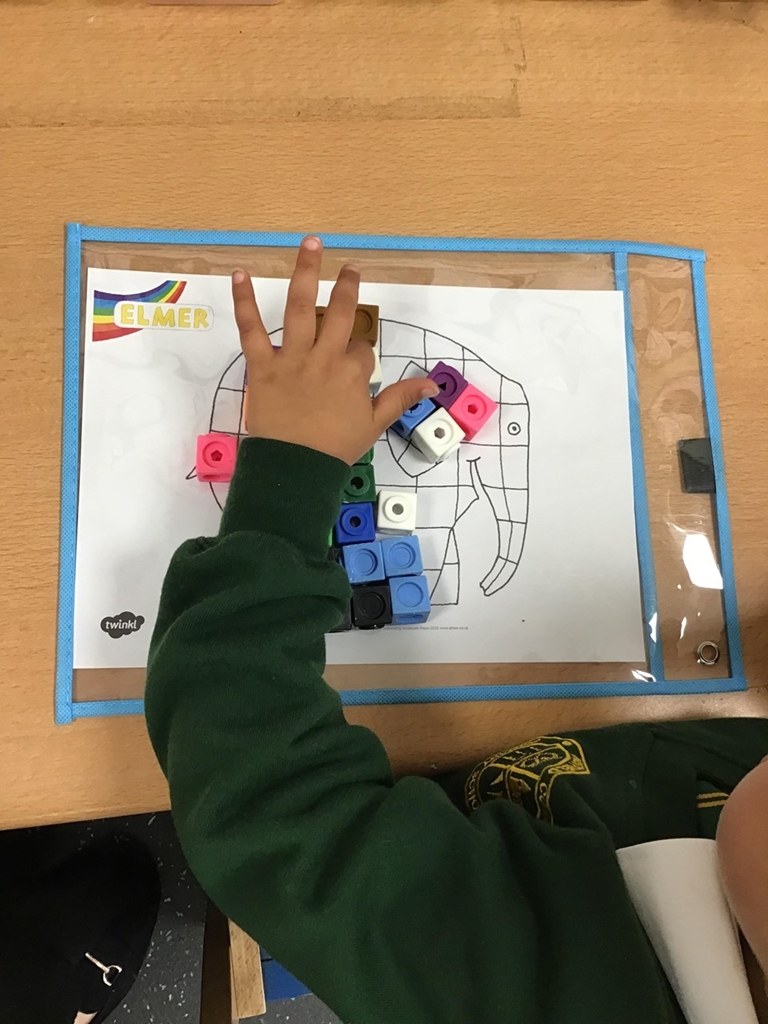
Our Maths Curriculum
The curriculum is carefully sequenced to ensure new learning builds on prior knowledge. Each year is divided into six blocks per half term, with flexibility in pacing based on class needs.
Teachers plan progression towards end-of-year expectations, using our layered KPIs (Key Performance Indicators) to support this. Each area of maths is revisited at least twice during the year to embed understanding. By allowing more time for each concept, we ensure learning is deep, secure, and sustainable.
Maths lessons take place for 50 minutes daily across KS1 and KS2. In EYFS, lessons are delivered through shorter 15–20 minute sessions of input and continuous provision.
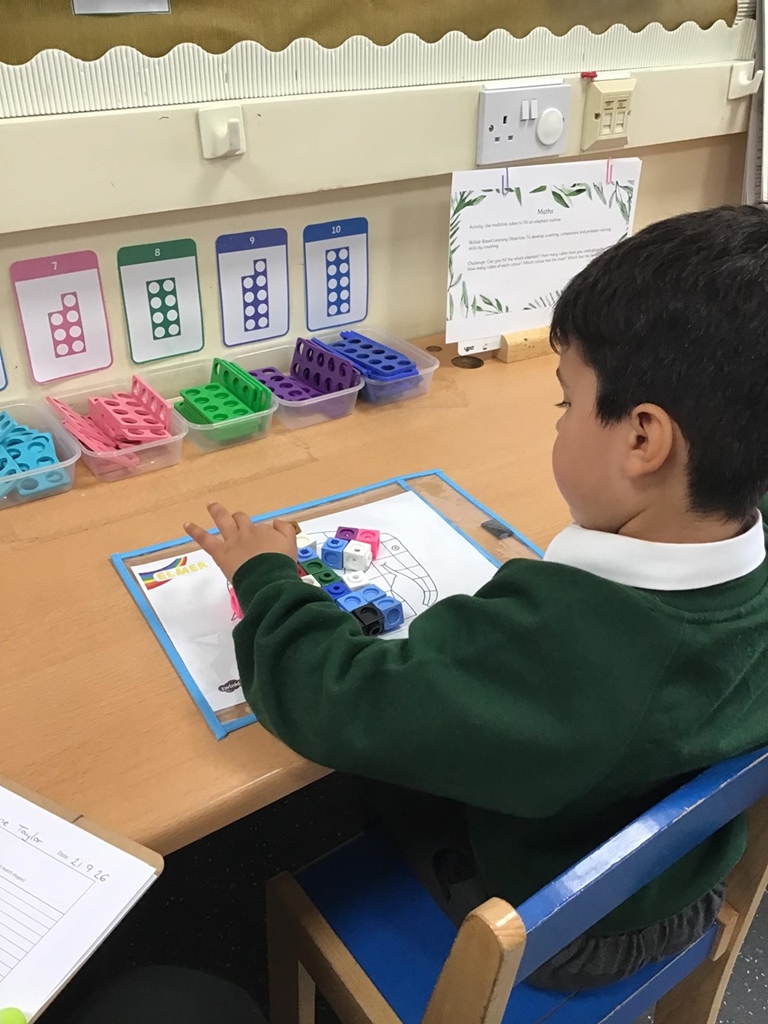
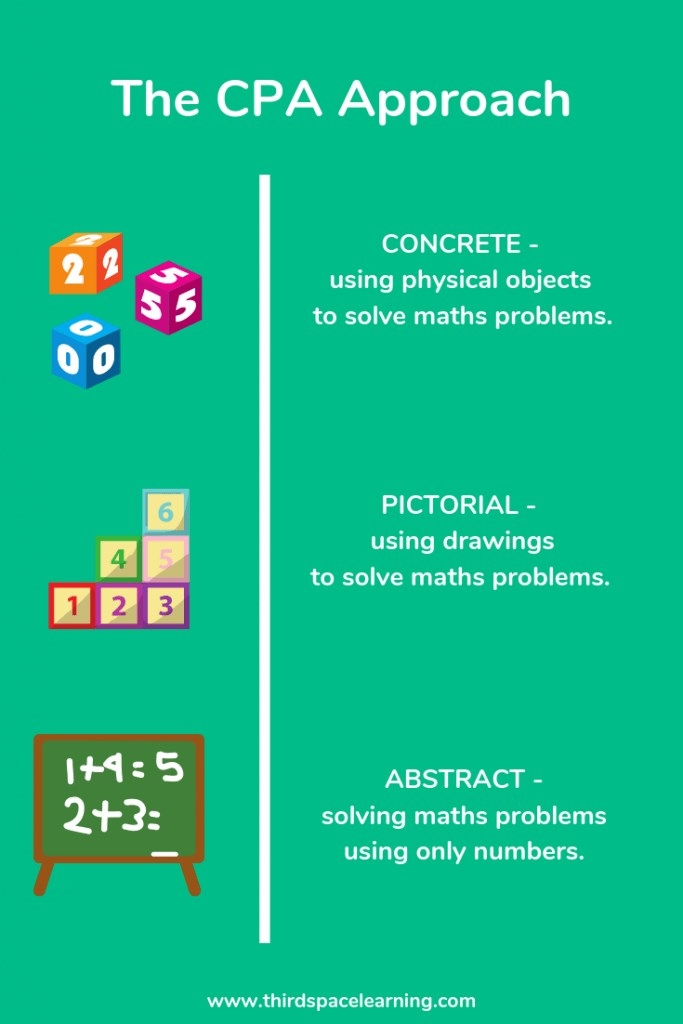
Maths lessons are characterised by the promotion of mathematical language, opportunities for purposeful collaboration, reasoning, and the consistent use of the Concrete, Pictorial and Abstract (CPA) model to ensure pupils develop a thorough understanding of the concepts being taught. The CPA approach – moving from the Concrete to Pictorial to Abstract representations – is a key part of the mastery approach to help all children develop a secure understanding of mathematical concepts.
Our Progression in Mathematics and Yearly Overview of Learning forms the backbone of implementation, lessons and tasks are adapted to meet the needs of all learners and to gather evidence of pupils’ mastery in fluency, reasoning, and problem-solving.
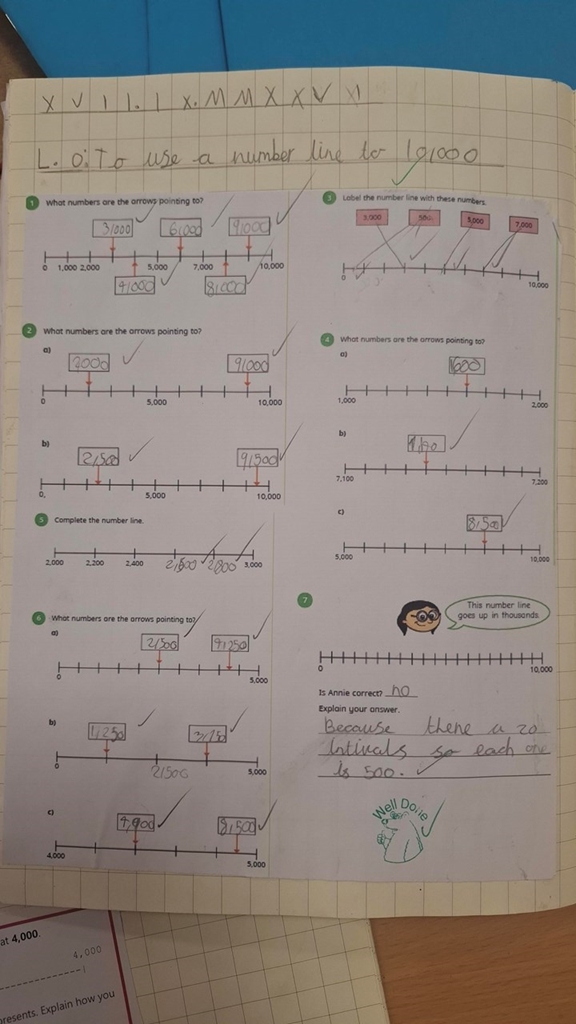
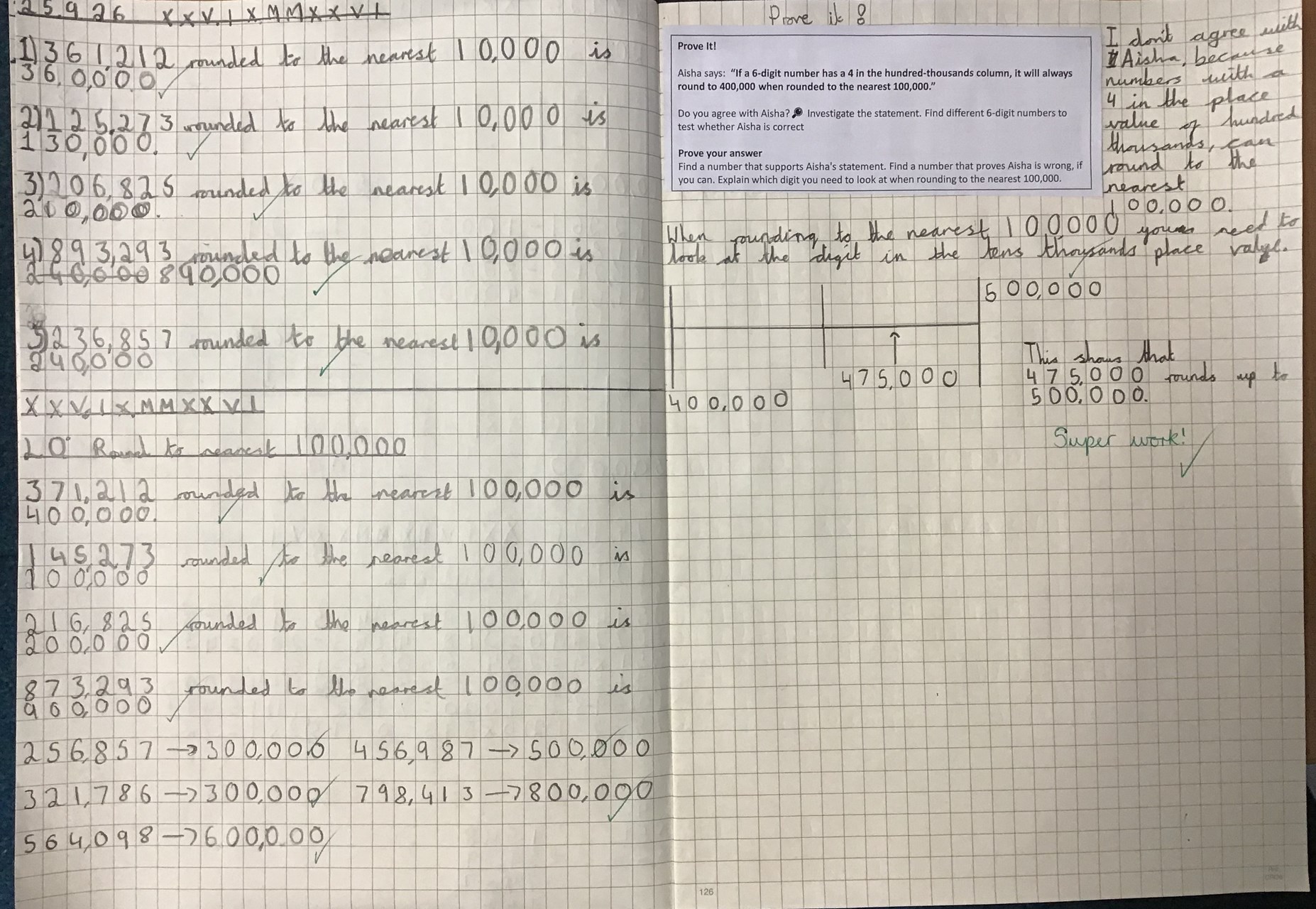
Learning is demonstrated through independent tasks carefully designed to scaffold learning, encouraging pupils to work independently, dive deeper, make connections, and engage in creative problem-solving. This approach promotes high expectations, self-challenge, and pride in their work.
Strong mental arithmetic skills in counting, number facts, and strategies are essential for mathematical fluency. To develop this, Mental Arithmetic Practice takes place from Reception to Year 6, building fluency, speed, and procedural understanding.
Each of our lessons follows a similar structure. We use 'Building blocks' to put new learning into context and activate prior learning, our lessons then follow an 'I do, we do, you do' approach.
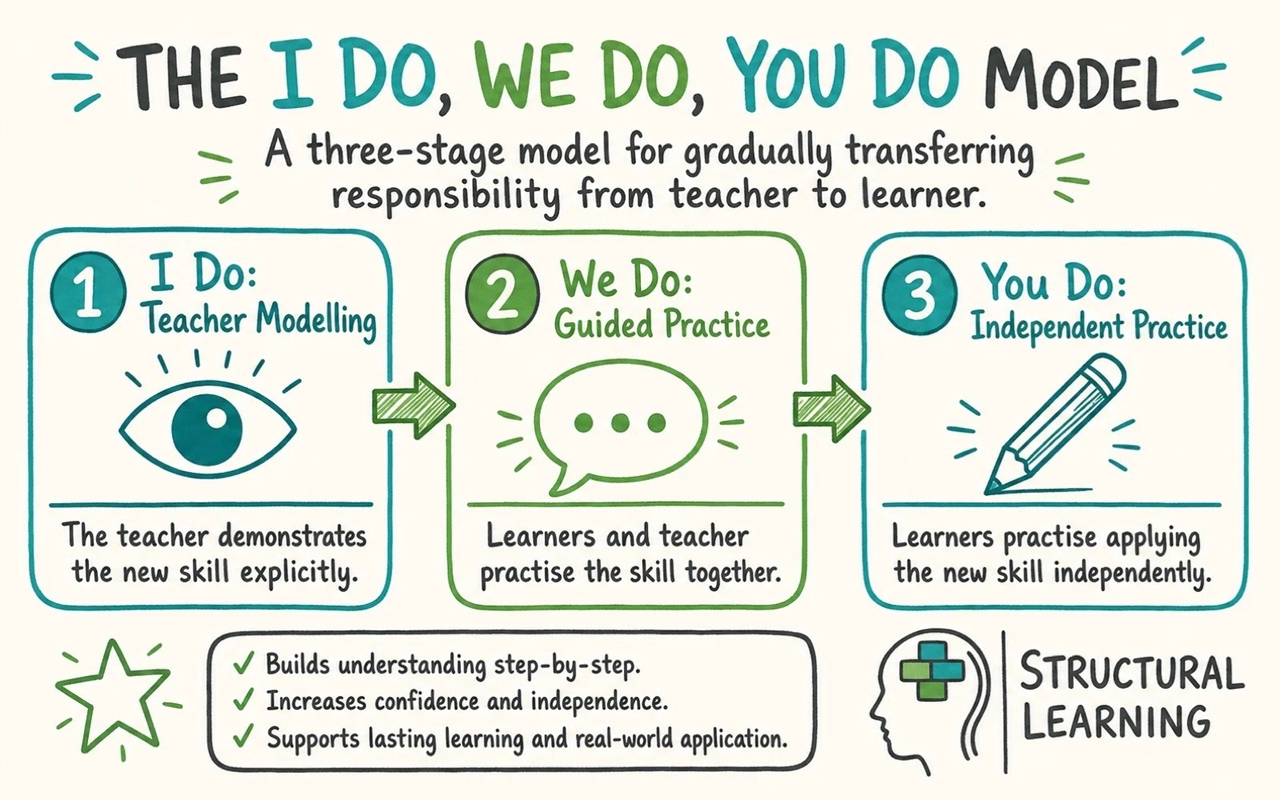
I Do (Teacher Modelling)
The teacher explicitly demonstrates a new concept or skill while thinking aloud and explaining the process step by step.
In maths:
- The teacher models how to solve a calculation.
- Key vocabulary and strategies are explained.
- Children listen, watch and ask questions.
Example:
"I am adding 36 and 25. First, I partition the numbers into tens and ones..."
We Do (Guided Practice)
The teacher and pupils work together to apply the new learning. Support, questioning and discussion help children develop confidence and understanding.
In maths:
- Children solve problems alongside the teacher.
- Partner discussion and collaborative tasks are used.
- Misconceptions are identified and addressed.
Example:
"Let's solve this one together. What should we do first? Why?"
You Do (Independent Practice)
Children apply their learning independently, demonstrating their understanding without direct support.
In maths:
- Pupils complete tasks independently.
- The teacher assesses understanding and provides feedback.
- Activities may be differentiated to provide appropriate challenge.
Example:
Children solve addition problems independently using the method they have practised.
Number Bonds and Times Tables
Fluent computation relies on the rapid and accurate recall of number bonds to 20 and multiplication facts. The National Curriculum expects all pupils to recall all multiplication tables up to 12 × 12 by the end of Year 4.
At Westfield, we prioritise quick recall and understanding of multiplication facts, essential for success in primary maths. To support this, we we use Times Tables Rock Stars with the expectation that by the end of Year 4, children recall multiplication and division facts up to 12×12.

Each June, Year 4 pupils complete the online Multiplication Tables Check, which tests their recall of times tables up to 12 × 12. The check consists of 25 questions, with six seconds to answer each and a three-second gap between questions. The Sound Check activity on Times Table Rock Stars activity mirrors this format, using the same rules and randomly generated questions.
Impact - What impact does our Maths curriculum have?
By the time pupils leave Westfield, they will:
- Develop fluency in mathematics through a secure understanding of number, calculation, geometry, measurement and statistics, alongside rapid recall of key number facts, including times tables and number bonds.
- Reason confidently and mathematically, explaining their thinking, justifying solutions and using precise mathematical vocabulary to communicate their understanding effectively.
- Demonstrate strong problem-solving skills, applying their knowledge to a range of challenges with resilience, perseverance and logical thinking.
- Achieve a deep and secure understanding of mathematical concepts, enabling them to make connections across different areas of mathematics and build confidently on prior learning.
- Apply mathematics to real-life contexts, recognising its importance in everyday situations and across other curriculum subjects.
- Show a positive attitude towards mathematics, approaching new learning with confidence, curiosity and a belief in their own ability to succeed.
- Be fully prepared for the next stage of their education, with the knowledge, skills and understanding needed to make a successful transition to secondary school and continue their mathematical learning journey.
The impact of our mathematics curriculum at Westfield is measured through ongoing formative assessment, summative assessments, pupil voice, lesson observations and the quality of pupils' work. Children demonstrate their understanding through fluent recall, effective reasoning and confident problem-solving. By fostering a love of mathematics and ensuring a deep conceptual understanding, we equip all pupils at Westfield with the skills and confidence needed for future learning and lifelong success.